Antaris
The world’s first platform that dramatically simplifies the design, simulation, and operation of satellite constellations.
Highlights
Planet Ventures Investment Details
“SpaceX plans to launch one million satellites to power orbital AI data center.”
There are nearly 15,000 satellites, active or inert in orbit as of January 2026.[1] And in January of 2026, SpaceX alone launched another 195 satellites into orbit.[2] Earth orbit is becoming exponentially more crowded but the way satellite missions are developed and controlled has barely changed since the 1960s.[3] A solution to prevent catastrophic space collisions is needed now.
Founded
2021
Headquarters
Los Altos, California
Focus
Space Software Platform
AI
AI-Powered
Antaris is a digital AI space platform that dramatically simplifies the design, simulation, and operation of space missions, bringing the best of terrestrial cloud computing and AI to the space domain. It features design tools, digital twinning, open APIs, complete spacecraft software, and a secure space data network with an approach to removing friction in the value chain to help clients reduce cost.
The Antaris AI-Powered Space Platform:
- “Virtualize” everything – reduce to software – apply AI
- Design, Simulate, Operate Satellite Constellations
- Cut Time to Orbit in Half, Reduce Lifetime Operating Costs by 10x, Deliver Better Results[1]
Antaris aims to become the Operating System of Space:
- PCs= Windows
- Phones= iOS/Android
- Satellites= Antaris
A unified, integrated, interoperable, OS for space missions will open orbital opportunities and markets far beyond what is currently possible.
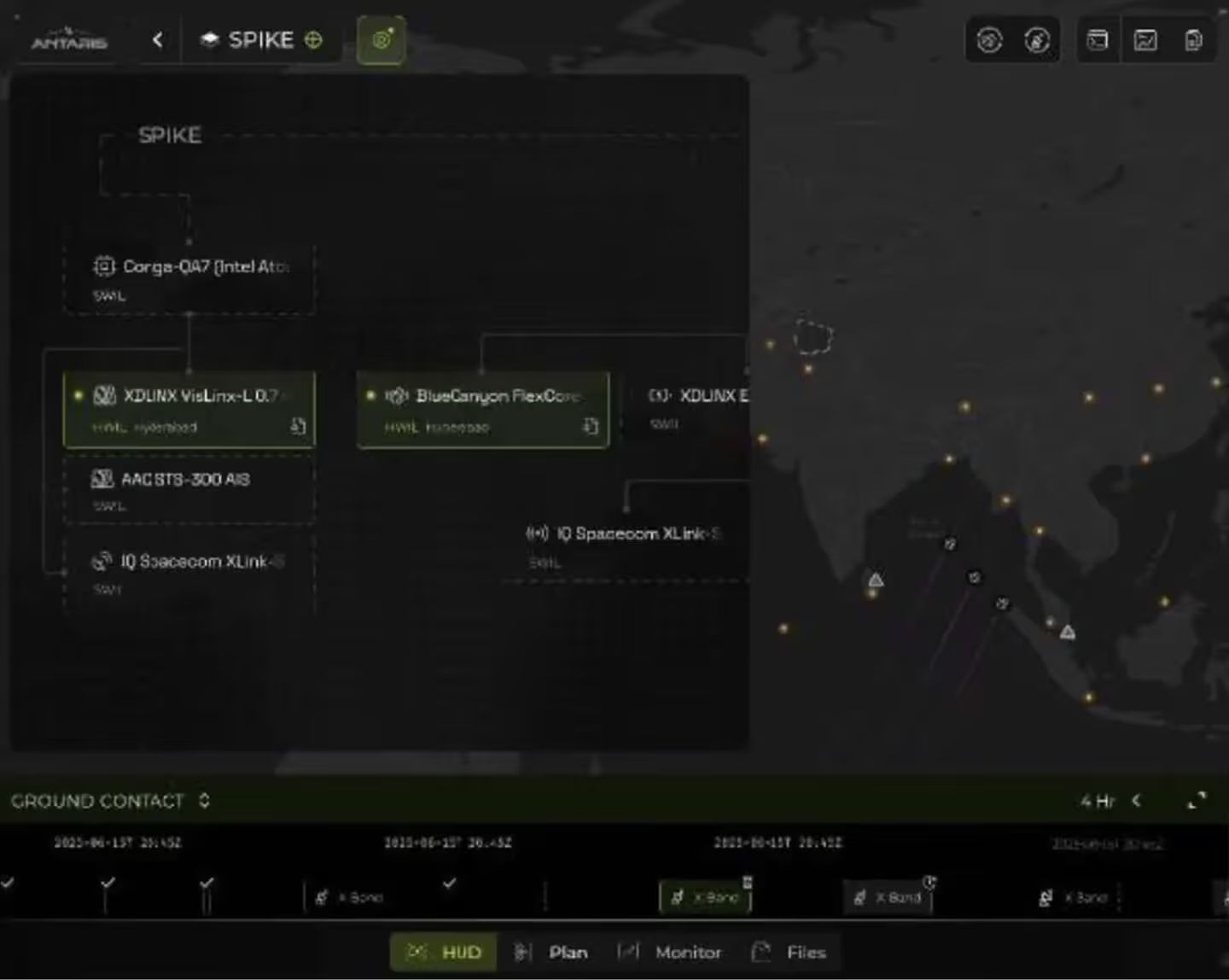
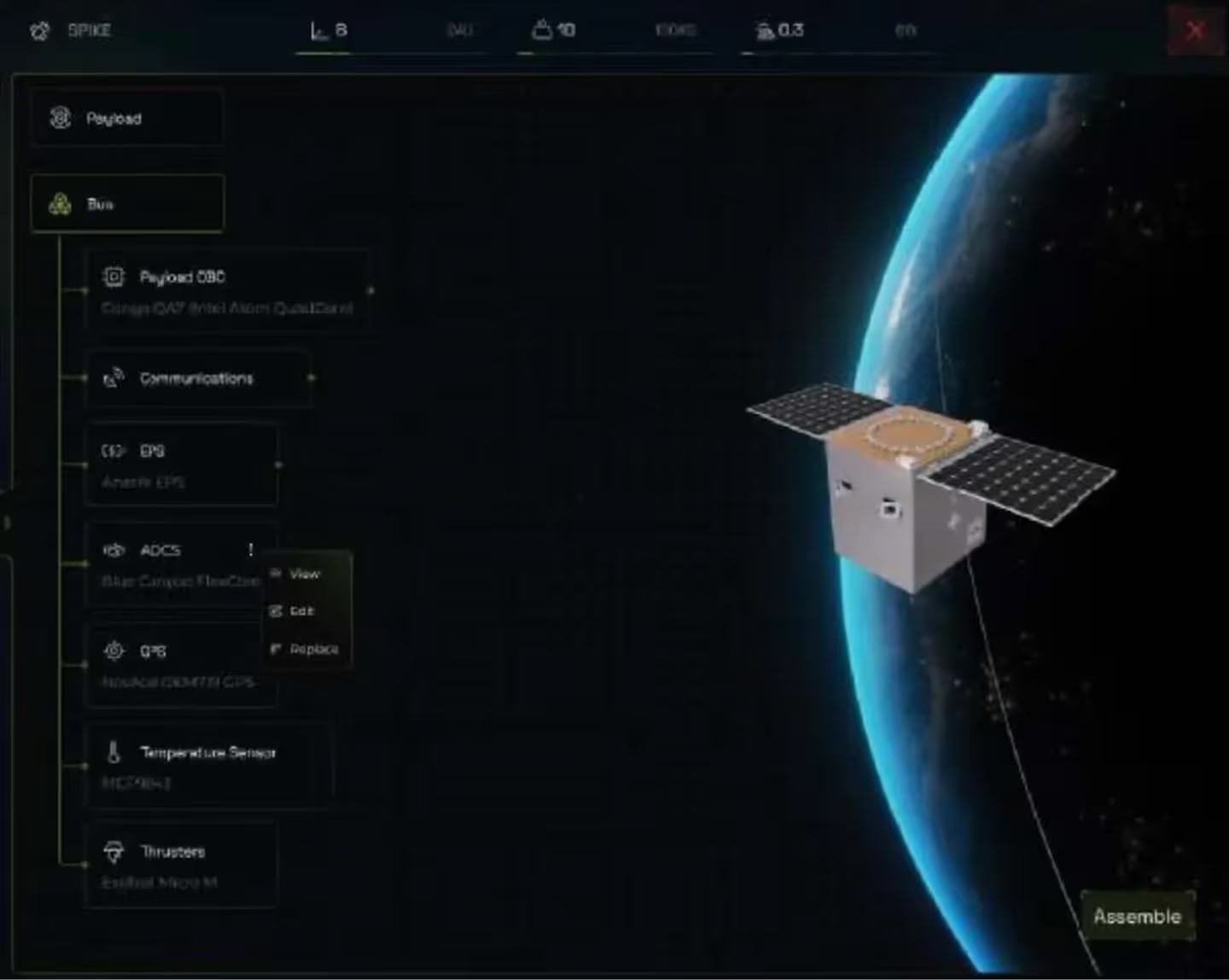
AI OS
AI OS for Space Missions
Ranked #1 in its sector by Tracxn.com[1], Antaris™, simplifies satellite design, simulation, manufacturing, and operations for ISR and communications satellite missions, today announced the first close of a $28 Million Series A funding round. The raise was led by WestWave Capital with participation from Lockheed Martin Ventures, other insiders, and new investors.
AntarisTM
Revolutionizing AI for Space[2]
Antaris was awarded a contract under the Missile Defense Agency’s SHIELD IDIQ (Golden Dome) Program. Under this contract vehicle Antaris will apply its Full Mission Virtualization™ capabilities to support the integration of complex, multi-system architectures and the development of Golden Dome mission operations. Antaris plans to deliver its AI Training Rangeto enable AI-generated Tactics, Techniques, and Procedures (TTPs), system Test and Evaluation, and operator training.[2]
Antaris and SARsatX have signed a MOA to deliver the SAR earth observation satellite constellation for Saudi Arabia.[4][5]
“Partnering with Antaris allows us to accelerate our roadmap, develop local talent, and demonstrate early success, while laying the foundation for future manufacturing in Saudi Arabia.”
— Amru Alamoudi - Co-founder, SARsatX
Team
The people behind Antaris
CEO & Co-Founder
Tom Barton
Prior to Antaris, Tom served as the COO at PlanetLabs. During his tenure, the company launched the first large-scale imaging constellations and acquired the high-resolution satellite business from Google/TerraBella/Skybox. Tom has held multiple CEO roles, including Rackable Systems (acquired by HPE). Rackable delivered server and storage solutions to hyperscalers, including the first implementations of AWS EC2 and S3 cloud offerings. He took Rackable public in 2005, which was one of the technology industry’s most successful IPOs that year. Tom also held senior leadership roles at open-source pioneers Cygnus Solutions and Red Hat.
CTO & Co-Founder
Karthik Govindhasamy
Prior to Antaris, Karthik served as the CTO at PlanetLabs, where he oversaw the development and deployment of all key software and hardware technologies, including TT&C protocols, communication systems, and mission control automation. With PlanetLabs, Karthik was instrumental in the development of the Dove medium resolution imaging satellite and the SuperDove medium-resolution imaging satellite. He also integrated the RapidEye constellation from BlackBridge and the SkyBox/Terrabella satellites into the Planet constellation. Karthik has led engineering teams at Nokia and Microsoft, where he launched multiple award-winning mobile & computing devices, including the Microsoft Surface tablet, enabling several $100M+ businesses.
Investors
Antaris Space Lead Investors




Stay Informed on the latest updates
Dive deeper into the company's operations, technology, and market opportunity